> ## Documentation Index
> Fetch the complete documentation index at: https://translations.mintlify.site/llms.txt
> Use this file to discover all available pages before exploring further.
# MfaWebauthnPlatformChallenge
> Describe todos los hooks y métodos disponibles para personalizar la pantalla `mfa-webauthn-platform-challenge` de Universal Login.
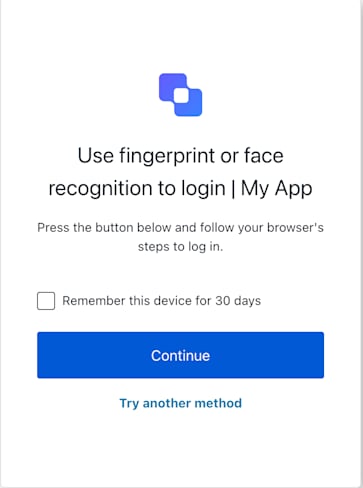
La pantalla `mfa-webauthn-platform-challenge` solicita al usuario que complete un desafío de MFA mediante un autenticador de plataforma, como Touch ID o Windows Hello, integrado en su dispositivo.
## Importación
Cada pantalla tiene su propio conjunto de hooks y métodos. El SDK admite la **importación parcial** y la **importación desde la raíz** para cada pantalla.
* La importación parcial te permite incluir solo el código que necesitas para tu caso de uso específico.
* La importación desde la raíz te permite cargar todas las pantallas desde un único paquete, lo que resulta útil si quieres una compilación única que gestione todas las pantallas posibles.
```jsx Import Example theme={null}
// importación desde la raíz
import { useMfaWebAuthnPlatformChallenge } from '@auth0/auth0-acul-react';
// importación parcial
import {
useMfaWebAuthnPlatformChallenge,
// Hooks de contexto
useUser,
useTenant,
useBranding,
useClient,
useOrganization,
usePrompt,
useScreen,
useTransaction,
useUntrustedData,
// Hooks comunes
useCurrentScreen,
useAuth0Themes,
useErrors,
// Hooks de utilidad
useChangeLanguage,
// Métodos
reportBrowserError,
tryAnotherMethod,
verify,
} from "@auth0/auth0-acul-react/mfa-webauthn-platform-challenge";
function MfaWebAuthnPlatformChallengeScreen() {
const { verify } = useMfaWebAuthnPlatformChallenge();
return (
);
}
```
## Hooks de contexto
Hooks de ámbito de pantalla que proporcionan acceso de solo lectura a los datos de contexto de Auth0 en la pantalla `mfa-webauthn-platform-challenge`. Impórtalos desde `@auth0/auth0-acul-react/mfa-webauthn-platform-challenge`.
() => BrandingMembers}>
Este hook proporciona configuraciones de marca, como el logotipo, los colores y los ajustes del tema que se muestran en la pantalla `mfa-webauthn-platform-challenge`.
```jsx Example theme={null}
import { useBranding } from '@auth0/auth0-acul-react/mfa-webauthn-platform-challenge';
function CustomTheme() {
const branding = useBranding();
}
```
() => ClientMembers}>
Este hook proporciona configuraciones relacionadas con el cliente, como `id`, `name` y `logoUrl`, para la pantalla `mfa-webauthn-platform-challenge`.
```jsx Example theme={null}
import { useClient } from '@auth0/auth0-acul-react/mfa-webauthn-platform-challenge';
function AppInfo() {
const client = useClient();
}
```
() => OrganizationMembers}>
Este hook proporciona información sobre la organización del usuario si el flujo de MFA está acotado a una organización. Devuelve `null` cuando no hay contexto de organización.
```jsx Example theme={null}
import { useOrganization } from '@auth0/auth0-acul-react/mfa-webauthn-platform-challenge';
function OrgSelector() {
const organization = useOrganization();
if (!organization) {
return
No organization context
;
}
}
```
() => PromptMembers}>
Este hook contiene datos sobre la pantalla actual del flujo de autenticación.
```jsx Example theme={null}
import { usePrompt } from '@auth0/auth0-acul-react/mfa-webauthn-platform-challenge';
function FlowInfo() {
const prompt = usePrompt();
}
```
() => ScreenMembersOnMfaWebAuthnPlatformChallenge}>
Este hook contiene detalles específicos de la pantalla `mfa-webauthn-platform-challenge`, incluida su configuración y su contexto.
```jsx Example theme={null}
import { useScreen } from '@auth0/auth0-acul-react/mfa-webauthn-platform-challenge';
function ScreenDebug() {
const screen = useScreen();
}
```
() => TenantMembers}>
Este hook contiene datos relacionados con el inquilino, como `id` y los metadatos asociados.
```jsx Example theme={null}
import { useTenant } from '@auth0/auth0-acul-react/mfa-webauthn-platform-challenge';
function TenantInfo() {
const tenant = useTenant();
}
```
() => TransactionMembers}>
Este hook proporciona datos específicos de la transacción para la pantalla `mfa-webauthn-platform-challenge`, como el estado actual del flujo de MFA.
```jsx Example theme={null}
import { useTransaction } from '@auth0/auth0-acul-react/mfa-webauthn-platform-challenge';
function TransactionInfo() {
const transaction = useTransaction();
}
```
() => UntrustedDataMembers}>
Este hook gestiona los datos no confiables que se pasan a la pantalla, como los valores rellenados previamente desde parámetros de URL.
```jsx Example theme={null}
import { useUntrustedData } from '@auth0/auth0-acul-react/mfa-webauthn-platform-challenge';
function PrefilledForm() {
const untrustedData = useUntrustedData();
}
```
() => UserMembers}>
Este hook proporciona información del usuario activo, incluidos `username`, `email` y los métodos de autenticación disponibles.
```jsx Example theme={null}
import { useUser } from '@auth0/auth0-acul-react/mfa-webauthn-platform-challenge';
function UserProfile() {
const user = useUser();
}
```
MfaWebAuthnPlatformChallengeMembers}>
Este hook devuelve todos los métodos y el contexto disponibles en la pantalla `mfa-webauthn-platform-challenge`.
## Métodos
Este método informa de un error de WebAuthn a nivel del navegador detectado durante el desafío del autenticador de plataforma.
```jsx Example theme={null}
import { useMfaWebAuthnPlatformChallenge } from '@auth0/auth0-acul-react/mfa-webauthn-platform-challenge';
function HandleWebAuthnError({ error }) {
const { reportBrowserError } = useMfaWebAuthnPlatformChallenge();
return (
);
}
```
**Parámetros del método**
[MfaWebAuthnPlatformChallengeReportErrorOptions](/es/docs/libraries/acul/react-sdk/API-Reference/Types/interfaces/MfaWebAuthnPlatformChallengeReportErrorOptions).
WebAuthnErrorDetails} required>
El objeto de error de la API de WebAuthn (`navigator.credentials.get()`) que se va a informar.
El nombre del error (por ejemplo, `'NotAllowedError'`).
El mensaje de error que describe qué salió mal.
Este método navega a la pantalla de selección del método de MFA para que el usuario pueda elegir un factor de autenticación diferente.
```jsx Example theme={null}
import { useMfaWebAuthnPlatformChallenge } from '@auth0/auth0-acul-react/mfa-webauthn-platform-challenge';
function TryAnotherMethodButton() {
const { tryAnotherMethod } = useMfaWebAuthnPlatformChallenge();
return (
);
}
```
Este método inicia la verificación del autenticador de plataforma para completar el desafío de MFA.
```jsx Example theme={null}
import { useMfaWebAuthnPlatformChallenge } from '@auth0/auth0-acul-react/mfa-webauthn-platform-challenge';
function VerifyButton() {
const { verify } = useMfaWebAuthnPlatformChallenge();
return (
);
}
```
**Parámetros del método**
[VerifyPlatformAuthenticatorOptions](/es/docs/libraries/acul/react-sdk/API-Reference/Types/interfaces/VerifyPlatformAuthenticatorOptions).
Opcional. Si es `true`, intenta recordar el navegador para futuros desafíos de MFA.
Corresponde al campo del formulario `rememberBrowser`. Esto solo se aplica si `screen.showRememberDevice` es `true`.
## Hooks comunes y de utilidad
useAuth0Themes} type="Hooks">
Este hook obtiene las opciones del tema actual con la configuración desanidada del contexto de marca.
useChangeLanguage} type="Hooks">
Este hook devuelve una función para cambiar el idioma que se muestra en la pantalla actual de ACUL.
useCurrentScreen} type="Hooks">
Este hook obtiene el contexto y el estado de la pantalla actual.
useErrors} type="Hooks">
Este hook lee y gestiona los errores del servidor, del cliente y del desarrollador en la pantalla.